The science behind the app

Three pillars. Three scientific frames.

The method, the tool, and the act of self-coaching — distilled from Jung, Adler, Frankl and contemporary neuroscience.

Personal development has a credibility problem: too many slogans, too little method. La Sphère takes the opposite route. Everything you do here — every self-coaching, every Iris question, every trace kept in your dashboard — rests on a century of clinical psychology and thirty years of neuroscience.

Not a patchwork of trendy schools. Three clear anchors: Carl Jung for the inner work, Alfred Adler for our place among others, Viktor Frankl for the search for meaning. And behind that, contemporary research on reflective writing, memory, action intention and brain plasticity.

The pillars

Three questions, three scientific answers

Why this method? Why a tool? Why on your own? For each question, serious researchers have been answering for a long time.

Pillar 1 · The method

Know yourself, connect, find meaning

Self-coaching with La Sphère means weaving together three movements that 20th-century clinical psychology established as foundational: looking into your unconscious, finding your place among others, choosing your why.

Jung — individuation

Becoming truly yourself: integrating your shadow, dialoguing with your unconscious, stepping out of the role expected of you. Jung calls this individuation — the work of an entire adult life.

"The meeting with oneself is, at first, the meeting with one's own shadow. The shadow is a tight passage, a narrow door, whose painful constriction no one is spared who goes down to the deep well." — Carl Gustav Jung

Inside La Sphère The Mirrors (self-coachings on identity, values, blocks, shadow) operationalise this introspective work.

Adler — self-image and social interest

For Adler, psychic health rests on two things: the opinion you hold of yourself, and the quality of your bond with the community. Symptoms appear when social interest collapses — when you stop feeling that you have a useful place among others.

"It is not what one is born with that matters, but the use one makes of it." — Alfred Adler, The Science of Living

Inside La Sphère The Vision and Strategy spheres translate your action into a plan; group coachings restore social interest.

Frankl — the search for meaning

For Frankl, founder of logotherapy, the deepest human motivation is neither the pursuit of pleasure (Freud) nor the will to power (Adler), but the search for meaning. Without a why, no method holds.

"He who has a why to live for can bear almost any how." — Viktor Frankl (quoting Nietzsche), Man's Search for Meaning

Inside La Sphère Iris, your AI coach, constantly brings the conversation back to your why — not to performance.

References

  • Jung, C. G. (1933). Modern Man in Search of a Soul. Routledge.
  • Adler, A. (1933/1998). Social Interest: A Challenge to Mankind. Oneworld.
  • Frankl, V. E. (2006). Man's Search for Meaning. Beacon Press.
Pillar 2 · The tool

Why an app, and not (only) a human

A self-coaching tool is not a substitute for a therapist. It is a cognitive extension: it makes visible and durable what ordinary memory loses. Three findings from research justify it.

Reflective writing — Pennebaker

Putting structured words on a difficult experience produces measurable effects on mental and physical health. Not just any words: a guided writing protocol. That is exactly what a self-coaching is.

"When people put their emotional upheavals into words, their physical and mental health improves markedly." — James W. Pennebaker, Writing to Heal

Inside La Sphère Each La Sphère self-coaching is, in effect, a guided reflective-writing protocol — not a free chat session.

External memory and continuity of the self — Tulving, Conway

Our identity rests on the memory of who we were. But ordinary memory reconstructs, distorts, forgets. A reliable external memory (the dashboard) restores the continuity of the self: you can re-read who you were 3 months ago and adjust.

"The self is constituted in the dialogue between episodic memory and the autobiographical narrative." — Conway & Pleydell-Pearce, The construction of autobiographical memories (2000)

Inside La Sphère The dashboard keeps every synthesis; each return becomes a dialogue with your past self.

24/7 availability and follow-through — Gollwitzer

Research on implementation intentions shows that spelling out when, where and how you will act doubles or triples the probability of follow-through. That requires a tool available at the moment of insight — not Tuesday at 6 p.m.

"Spelling out when, where, and how one will act doubles or triples the likelihood that the action will actually take place." — Peter Gollwitzer, Implementation Intentions (1999)

Inside La Sphère Iris is on call the moment the insight strikes, not only when a human coach is available.

References

  • Pennebaker, J. W. (2004). Writing to Heal: A Guided Journal for Recovering from Trauma & Emotional Upheaval. New Harbinger.
  • Conway, M. A., & Pleydell-Pearce, C. W. (2000). The construction of autobiographical memories in the self-memory system. Psychological Review, 107(2).
  • Gollwitzer, P. M. (1999). Implementation intentions: Strong effects of simple plans. American Psychologist, 54(7).

Pillar 3 · Self-coaching

Why you are the one who has to do the work

Choosing to self-coach isn't choosing the cheap option. It is claiming that responsibility for meaning and direction stays with you. It is a posture — and three scientific traditions support it.

Frankl — the last of the human freedoms

Between the stimulus and the response, there is a space. In that space lies our freedom to choose. No coach, no therapist, no AI can occupy it for you. Frankl proved it, even in the camps.

"Everything can be taken from a man but one thing: the last of the human freedoms — to choose one's attitude in any given set of circumstances, to choose one's own way." — Viktor Frankl, Man's Search for Meaning

Inside La Sphère The app never imposes an answer. It asks the questions; only you can answer them.

Adler — the individual as creator of their life

Adler refuses determinism. The human being is not the victim of childhood or context; they interpret, and they choose. This stance — creative agency — is now picked up by every contemporary CBT (Beck, cognitive schemas).

"The individual is the creator of his own personality. He builds his style of life from the materials he is given, but he is the one who builds." — Alfred Adler, The Science of Living

Inside La Sphère No value judgement in self-coachings: we map, we clarify, and you decide.

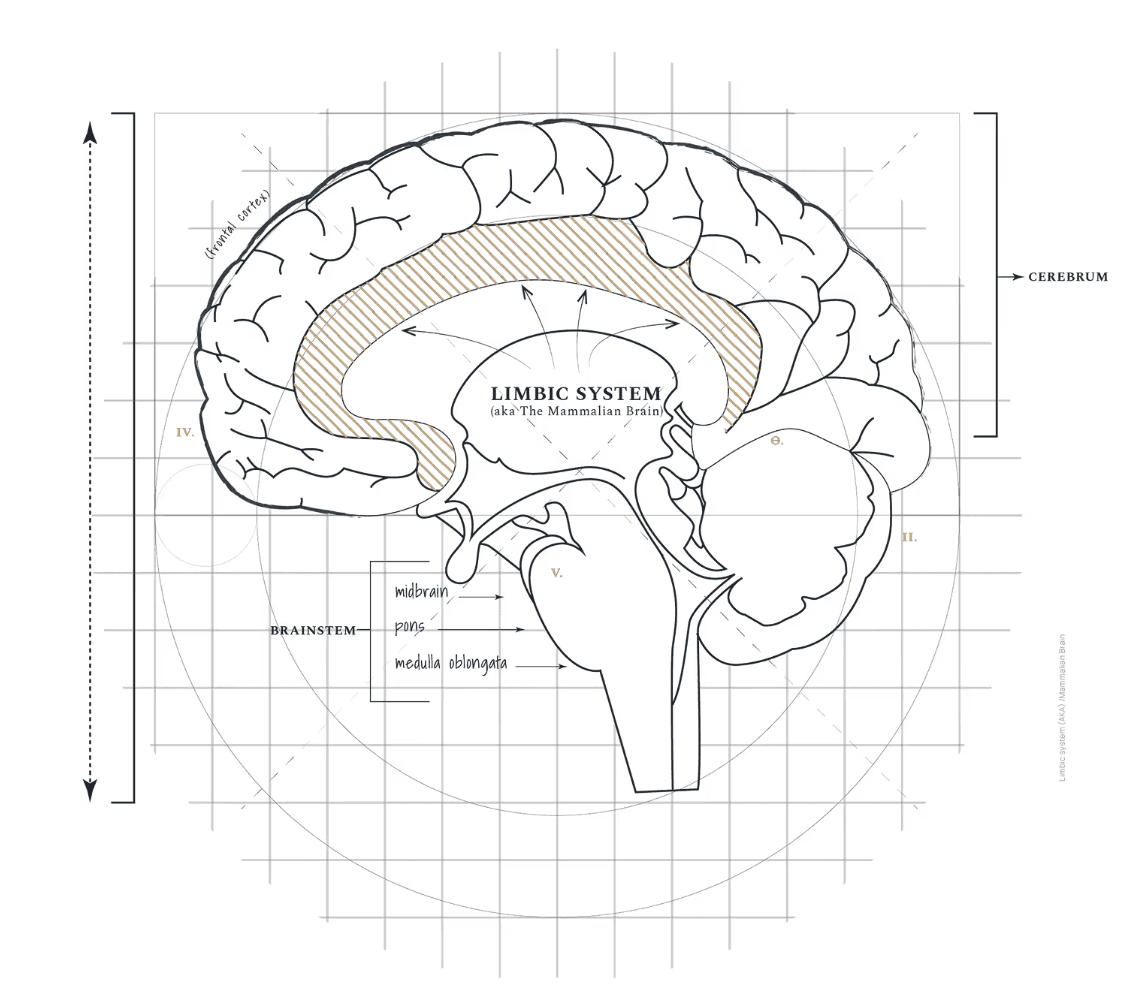
Brain plasticity — Doidge, Eriksson, Maguire

For fifty years we believed the adult brain was fixed. Research since 1998 shows the opposite: the brain creates new neurons (Eriksson), reorganises its circuits (Maguire), and physically changes with practice (Doidge). But this requires regularity, not a one-off event.

"The brain can reorganize itself physically in response to experience, at any age. Plasticity is the rule, not the exception." — Norman Doidge, The Brain That Changes Itself

Inside La Sphère Repeated self-coaching — not the one-off event — is what produces lasting change.

References

  • Frankl, V. E. (2006). Man's Search for Meaning. Beacon Press.
  • Adler, A. (1933/1998). Social Interest: A Challenge to Mankind. Oneworld.
  • Doidge, N. (2007). The Brain That Changes Itself. Penguin.
  • Eriksson, P. S., et al. (1998). Neurogenesis in the adult human hippocampus. Nature Medicine, 4(11).

Our principles

How we hold the line

01

Evidence-based first

When a theoretical frame hasn't held up in clinical practice, in research or in meta-analyses, it doesn't enter the app. We don't follow trends.

02

Method, not mood

Every self-coaching follows a structured protocol, designed to respect the rhythm of a real coaching session. Iris doesn't improvise — it applies.

03

Scientific humility

We don't replace a psychologist, a therapist, or a human coach in a crisis. La Sphère is a tool for working on yourself, not a treatment. We say it from day one.

We don't treat. We don't stand in for the psychologist either. We give everyone the tools to become the first expert of their own life.
Lucas Guasch · Founder of La Sphère

Put science to work in your daily life

Knowledge changes nothing without practice. Start with a first self-coaching — that's where Jung, Adler and Frankl become useful.